 Alankomaat
 Albania
 Amerikan yhdysvallat
 Argentiina
 Australia
 Belgia
 Bosnia ja Hertsegovina
 Brasilia
 Bulgaria
 Chile
Chile
 Espanja
 Etelä-Afrikka
 Filippiinit
 Irlanti
 Iso-Britannia
 Italia
 Itävalta
 Kanada
 Kolumbia
 Kreikka
 Kroatia
 Latvia
 Liettua
 Luxemburg
 Meksiko
 Moldova
 Montenegro
 Norja
Norja
 Pohjois-Makedonia
 Portugali
 Puola
Puola
 Ranska
 Romania
 Ruotsi
 Saksa
Saksa
 Serbia
 Slovakia
 Slovenia
 Suomi
Suomi
 Sveitsi
 Tanska
 Turkki
 Tšekin tasavalta
 Ukraina
 Unkari
 Uusi-Seelanti
 Viro
Viro







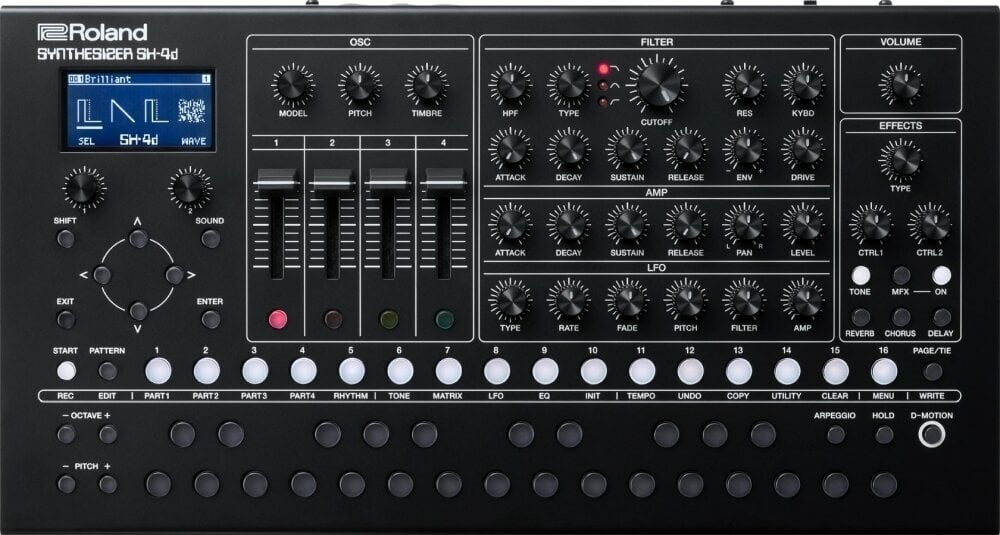
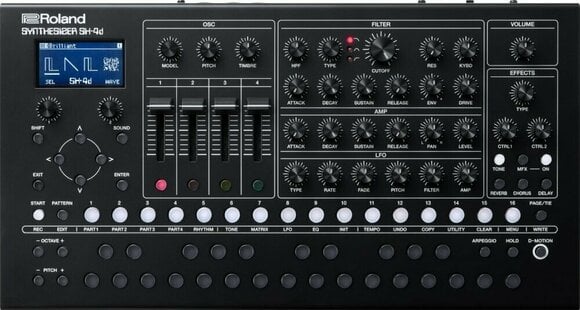
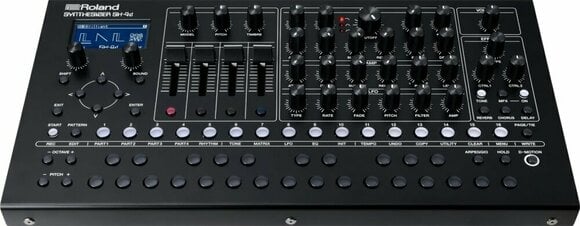
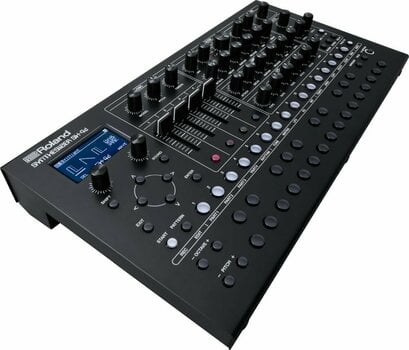

Roland SH-4D Syntetisaattori
The Roland SH-4D desktop synthesizer packs a 5-part multitimbral engine, 60-voice polyphony, and 11 OSC models into a portable battery-powered unit. It blends vintage analog-style sound with modern digital textures, including wavetable, cross FM, and the SH-101 and Juno-106 legacy voices. A built-in motion sensor, Visual Arpeggio, and 64-step sequencer make it equally suited for studio sound design and live performance.
- 5-part architecture with 4 synth parts plus a dedicated rhythm part running up to 26 instruments per kit
- 60-voice polyphony with per-part voice reservation for reliable multitimbral playback
- Multimode digital ladder filter with HPF, pre-filter Drive, and interactive Resonance
- Runs on USB-C bus power or 4 AA batteries for up to 4 hours of cable-free creation
Roland SH-4D Desktop Synthesizer — Five Parts, One Portable Groovebox
This desktop synthesizer and groovebox condenses a full multitimbral workstation into a unit small enough to run on AA batteries. Eleven OSC models span vintage analog-style tones, the SH-101 and Juno-106 legacy voices, cross FM, wavetable, ring modulation, sync, chord, drawing, and PCM sounds. With 60 voices of polyphony and a 64-step sequencer per part, this model lets a single hardware unit sketch, sequence, and perform a complete track.
What Sets the Instrument Apart
D-Motion is a built-in motion sensor that lets players tilt the unit to modulate two assignable parameters on the X/Y axis. Visual Arpeggio represents a physics-based mini-sequencer with five modes including bounce, bubble, sketch, pong, and orbit that generates note patterns through interactive on-screen animations. A dedicated Modulation Matrix routes LFOs, envelopes, and external MIDI sources to nearly any parameter, while the multimode digital ladder filter shapes every voice.
Synthesis Architecture — Polyphony and OSC Models
Polyphony and oscillator variety define how complex a track can become inside one box, with enough headroom for layered chords, stacked basslines, and full rhythm parts running simultaneously.
- The device offers 60 voices of maximum polyphony distributed across parts with per-part voice reservation.
- OSC Models: 11 engines — SH-4D, SH-3D, Sync, SH-101, Juno-106, Cross FM, Ring, Wavetable, Chord, Drawing, PCM
- Multitimbral Parts: 5 (4 synth + 1 rhythm) — independent sound design per part
Sequencer, Arpeggiator, and Performance Controls
Pattern sequencing and motion recording turn sound design into full arrangements without leaving the hardware.
- Sequencer Steps: 64 per part — with probability, flams, substeps, and motion recording across four lanes
- Arpeggiator: 5 types — plus the physics-based Visual Arpeggio for motion-driven patterns
- Pitch Bend: Yes — dedicated pitch bend buttons plus D-Motion tilt sensor for X/Y modulation
Effects Engine and Connectivity
A serious effects section and flexible I/O make this unit slot into studio racks, stage rigs, and mobile setups without compromise.
- Effects: Master Effect, Master EQ, Master Compressor, Reverb, Chorus, Delay — plus 93 MFX types across 5 systems
- Modulation: Modulation Matrix — routes LFOs, envelopes, and MIDI CCs to nearly any parameter
- Connectivity: USB-C, 5-pin MIDI I/O, 3.5 mm mix in, 1/4" stereo out, headphone out, clock input — plus 12 discrete USB audio channels to a DAW
Who the SH-4D Is Built For
It is the right choice for electronic producers, groovebox enthusiasts, and live performers who want deep sound design without menu-diving. Synthesists coming from Roland's ZenCore family will appreciate the simplified, hands-on engine layout, while hardware-first beatmakers gain a five-part workstation that runs on AA batteries for sketching on the road. DJs and live acts benefit from D-Motion tilt control and Visual Arpeggio, adding physical performance gestures. Studio producers can route the unit into a DAW over USB-C with 12 discrete audio channels.
Roland and the SH Heritage
Roland's SH series stretches back to the SH-101, a monophonic analog synth from 1982 that became a defining voice in early house, techno, and acid. The Juno-106, released in 1984, brought polyphony and the famous chorus effect to a generation of pop and electronic producers.
",description_sk: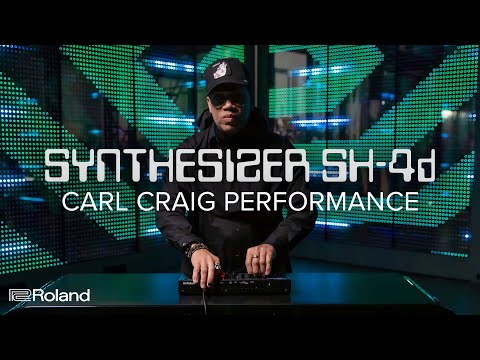

Tyyppi
Desktop Synthesizer
LFO
Verhokäyrä
Kyllä
Oskillaattorit
Modulaatio
Fader-liuku
Kyllä (4)
Arpeggiator
Efektityypit
Kaiku (9 x), Chorus (5 x), Viive (5 x), Master Effect (93 x), Master EQ, Master Compressor
MIDI-liitäntä
Bluetooth
Sisäänrakennettu kaiutin
Sovittaja
Äänimoottori
Koskettimien määrä
Koskettimien koko
Mini
Polyfonia
Pitch bend
Kyllä
Tallennusväline
Näyttö
Näytön tyyppi
Väri
Kuulokelähtö
Pedaalin sisääntulot
Analogiset lähdöt
Mikrofonitulo
USB
USB-MIDI
USB-laite
USB-isäntä
Suodatin
Kyllä
Sekvensseri
Kyllä
Pakkauksen sisältö
Leveys (cm)
36
Korkeus (cm)
6,6
Syvyys (cm)
19,5
Nettopaino (kg)
1,78
Valmistettu
Malesia


Asiakirjat
Käyttöohjeet
Turvallisuusohjeet
Katso tämän tuotteen turvallisuusohjeet käyttöoppaasta.