 Alankomaat
 Albania
 Amerikan yhdysvallat
 Argentiina
 Australia
 Belgia
 Bosnia ja Hertsegovina
 Brasilia
 Bulgaria
 Chile
Chile
 Espanja
 Etelä-Afrikka
 Filippiinit
 Irlanti
 Iso-Britannia
 Italia
 Itävalta
 Kanada
 Kolumbia
 Kreikka
 Kroatia
 Latvia
 Liettua
 Luxemburg
 Meksiko
 Moldova
 Montenegro
 Norja
Norja
 Pohjois-Makedonia
 Portugali
 Puola
Puola
 Ranska
 Romania
 Ruotsi
 Saksa
Saksa
 Serbia
 Slovakia
 Slovenia
 Suomi
Suomi
 Sveitsi
 Tanska
 Turkki
 Tšekin tasavalta
 Ukraina
 Unkari
 Uusi-Seelanti
 Viro
Viro







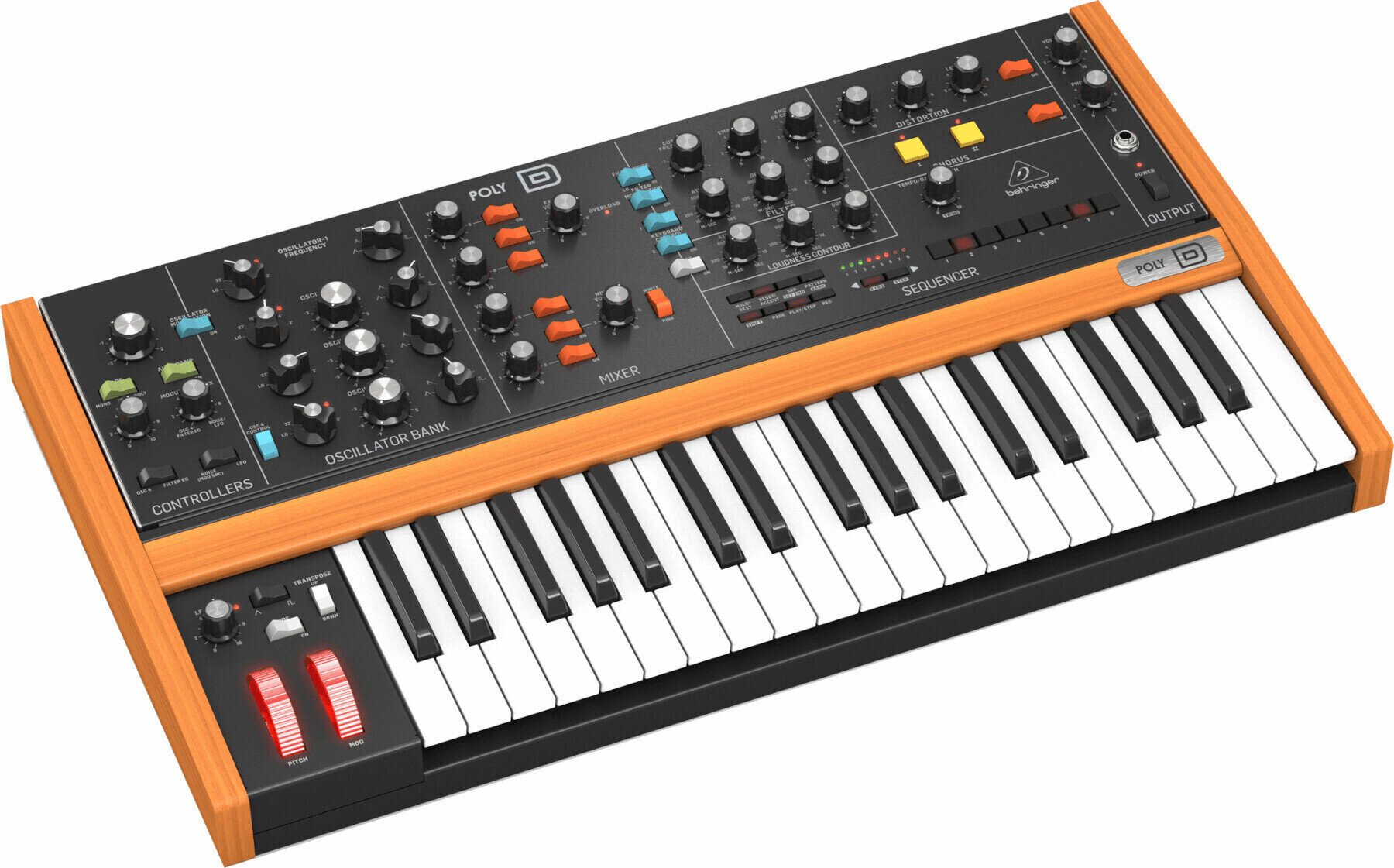
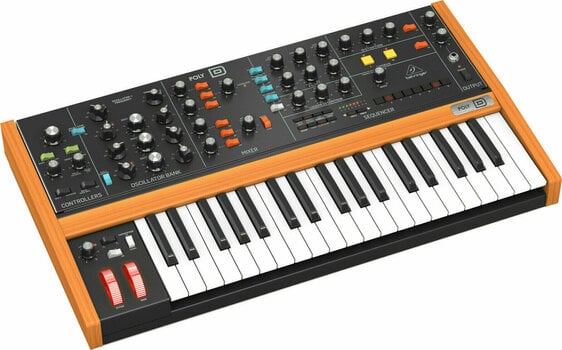
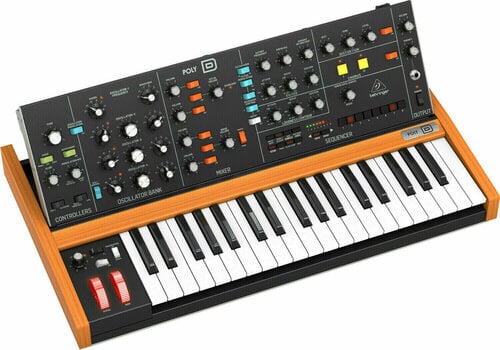
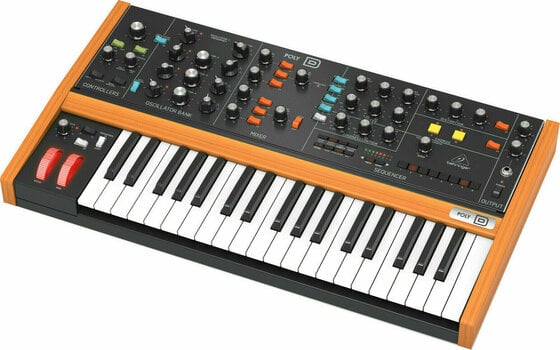

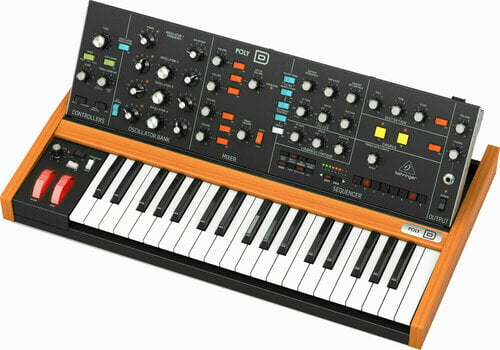
Behringer POLY D Syntetisaattori
The Behringer POLY D is an analog 4-voice polyphonic synthesizer that pays tribute to the iconic 1971 Minimoog Model D while adding modern features like a fourth oscillator, BBD stereo chorus, and onboard sequencer. With 37 full-size velocity-sensitive keys, an authentic 24 dB ladder filter, and a pure analog signal path, it delivers the fat basses and searing leads that defined progressive rock and synth-pop. Switchable Mono, Poly, and Unison modes let one player cover everything from expressive solos to lush chord pads.
- Four independent analog VCOs with five selectable waveforms each, spanning a six-octave range for massive sound design flexibility.
- Classic 24 dB ladder filter with switchable low-pass and high-pass modes plus dedicated envelope shaping for vintage character.
- Built-in 32-step sequencer and arpeggiator with 64 patterns across 8 banks, ready for hands-off performance and studio work.
- J60-modeled BBD stereo chorus and DS1-modeled analog distortion add width and grit without external pedals.
Behringer POLY D Analog Polyphonic Synthesizer — Four Voices of Classic Analog Power
The Behringer POLY D is a 4-voice analog polyphonic synthesizer built around the legendary architecture of the 1971 Minimoog Model D, expanded with modern performance features for today's keyboardists. Its pure analog signal path runs through authentic VCO, VCF, VCA, and ladder filter circuits, giving players the same fat basses, blistering leads, and progressive organ tones that defined an era of music. The POLY D is the right choice for synthesists who want genuine analog sound and real-time knob-per-function control without menu diving.
Four VCOs, Three Modes, and a Ladder Filter at the Core
What separates the POLY D from a standard mono reissue is its fourth voltage-controlled oscillator and switchable Mono, Poly, and Unison modes, letting a single instrument cover expressive leads, four-note chord harmonies, and stacked unison thickness. The 24 dB ladder filter with switchable low-pass and high-pass operation, plus dedicated Attack, Decay, and Sustain envelope controls, sits at the heart of its sound. J60-modeled BBD stereo chorus and DS1-modeled analog distortion circuits are integrated directly into the signal path, expanding the tonal palette without external pedals.
Keyboard, Polyphony, and Performance Controls
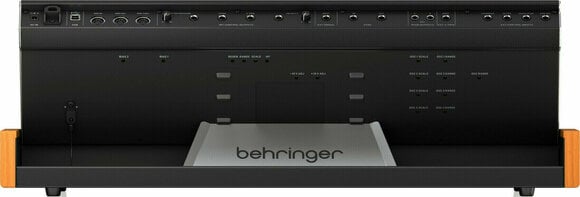
The 37-key semi-weighted keyboard with full-size keys, velocity sensitivity, and aftertouch gives performers expressive control over dynamics and modulation in real time. Four voices of polyphony, combined with the dedicated modulation wheel, pitch wheel, and glide control, make this instrument equally suited to studio composition and live performance. Players can route aftertouch, velocity, pitch, and V-Trigger signals out through dedicated 1/4" jacks to interface with modular gear and external processors.
- Keys: 37 full-size, semi-weighted — full-size keys with velocity and aftertouch for expressive playing
- Polyphony: 4 voices — plus Mono and Unison modes for one-voice leads and stacked thickness
- Aftertouch: Yes (After Pressure) — dedicated output jack with sensitivity control
- Modulation: Pitch and Mod wheels, Glide — classic performance controls for bending and vibrato
Oscillators, Filter, and Sound Engine
Four analog voltage-controlled oscillators form the sound source, each offering five selectable waveforms across a six-octave range (LO, 32', 16', 8', 4', 2'). OSC 1, 2, and 3 share triangular, triangular/saw, saw, square, wide pulse, and narrow pulse options, while OSC 4 adds a reverse saw wave and can be switched out of keyboard control to act as a fifth modulation source. The 24 dB ladder filter with switchable low-pass and high-pass modes, plus dedicated envelope shaping, gives the POLY D its signature vintage character.
- Oscillators: 4 analog VCOs — five waveforms each, six-octave range for deep sound design
- Filter: 24 dB Ladder, switchable LP/HP — vintage Moog-style tone with adjustable Emphasis and Contour
- LFO: 1 triangle/square wave — for slow filter sweeps and rhythmic modulation effects
- Envelope: ADS — Attack, Decay, and Sustain shaping for both VCA and VCF
Sequencer, Effects, and Connectivity
The onboard 32-step sequencer with 64 patterns across 8 banks, plus a built-in arpeggiator, makes the POLY D a self-contained performance and composition tool. Integrated BBD stereo chorus and analog distortion circuits add movement and grit without needing external effects. Full MIDI In/Out/Thru via both 5-pin DIN and USB Type B, plus dedicated control voltage inputs and outputs, allow deep integration with modular systems and DAW-based studios.
- Sequencer: 32 steps, 64 patterns, 8 banks — plus arpeggiator for generative performance
- Effects: BBD Stereo Chorus, analog Distortion — J60- and DS1-modeled circuits built into the signal chain
- MIDI: In/Out/Thru via USB and 5-pin DIN — class-compliant USB 2.0 for direct DAW integration
- Controls: 84 total knobs and switches — hands-on, menu-free operation
Who Is the Behringer POLY D For?
The POLY D is the right choice for synth players and producers who want classic analog tone with the flexibility of true polyphony at a working musician's price. It suits electronic music producers building basses and pads, learners exploring subtractive synthesis without menu diving, and live performers needing a road-ready instrument with wood-trimmed vintage aesthetics and 84 dedicated controls. Keyboardists coming from digital workstations will appreciate the immediate, hands-on workflow, while vintage synth enthusiasts get the ladder filter character and four-oscillator architecture that defined the original Model D era.
Behringer and the POLY D Story
Behringer was founded by Uli Behringer, born in 1961 in Baden, Switzerland, who built his first synthesizer, the UB-1, at age 17 before going on to establish the company. The POLY D draws directly on the 1970s portable analog synthesizer era, when artists like Jan Hammer, Chick Corea, Rick Wakeman, Jean-Michel Jarre, Isao Tomita, and Keith Emerson shaped the sound of progressive rock and electronic music. By adding a fourth oscillator, polyphonic capability, BBD chorus, distortion, and a 32-step sequencer to the original Model D concept, the POLY D brings that legacy into a modern performance instrument.


Tyyppi
Keyboard Synthesizer
Aftertouch
LFO
Verhokäyrä
ADS (2 )
Oskillaattorit
Modulaatio
Arpeggiator
MIDI-liitäntä
Bluetooth
Äänimoottori
Koskettimien määrä
Kosketinsoittimen tyyppi
Synth Action, Velocity sensitive
Koskettimien koko
Standard
Polyfonia
Pitch bend
Kyllä
Tallennusväline
Kuulokelähtö
Tulot
Lähdöt
Pedaalin sisääntulot
USB-MIDI
Suodatin
Low Pass, High Pass
Sekvensseri
Kyllä
Virtalähde
Adapteri
UK/EU-virtalähde mukana
Leveys (cm)
64,7
Korkeus (cm)
8,9
Syvyys (cm)
36
Paino
11,5 kg
Nettopaino (kg)
10,2
Valmistettu
Kiina


Kaikki arvostelut tulevat vahvistetuilta asiakkailta, jotka ovat ostaneet meiltä tuotteen aikaisemmin.
Kaikki arvostelut
Arvostelujen tekoälykooste
Kaikki arvostelut tulevat vahvistetuilta asiakkailta, jotka ovat ostaneet meiltä tuotteen aikaisemmin.
Vahvuudet
- Aito analoginen ääni: Asiakkaat kehuvat jatkuvasti syntetisaattorin äänenlaatua ja huomauttavat sen läheisestä samankaltaisuudesta alkuperäisen Minimoogin kanssa sekä sen sopivuudesta analogiseen musiikkiin.
- Poikkeuksellinen hinta-laatusuhde: Monet arvostelijat korostavat tuotteen edullisuutta ja toteavat, että se tarjoaa hintaansa nähden loistavan äänen ja ominaisuudet, mikä tekee siitä "parhaan ostoksen" monille.
- Rakennuksen laatu: Syntetisaattoria kuvaillaan vankaksi ja korkealaatuiseksi, ja sen komponentit tuntuvat tukevilta ja hyvin sovitetuilta.
- Monipuoliset soittotilat: Instrumentti tarjoaa polyfonisia ja monofonisia tiloja, ja asiakkaat pitävät polyfonista tilaa sopivana pad-äänien luomiseen ja monotilaa verrattavissa Minimoogiin, jossa on lisäääniä.
- Tehokas sekvensseri: Sisäänrakennettu sekvensseri parantaa merkittävästi laitteen ominaisuuksia, vaikka jotkut käyttäjät pitävät sen käyttöä monimutkaisena.
Heikkoudet
- Rakennuksen laatuongelmat: Jotkut käyttäjät raportoivat fyysiseen laatuun liittyvistä ongelmista, kuten löysistä kiertokytkimistä ja puuttuvista koriste-osista saapuessa, mikä viittaa epäjohdonmukaiseen laadunvalvontaan.
- Monimutkainen käyttöliittymä: Sekvensserin toiminta on todettu monimutkaiseksi, ja käyttöopasta pidetään hyödyttömänä aloittelijoille, mikä tekee joidenkin ominaisuuksien oppimiskäyrästä jyrkän.
- Rajoitettu Chorus-säätö: Chorus-efektistä, vaikka sitä yleisesti pidetäänkin, puuttuu säädettäviä parametreja, kuten märkä/kuiva-säätö, ja toisen chorus-asetuksen koetaan olevan liian suuri.
Mitä asiakkaat toistavat
Lopputulos
Asiakirjat
Käyttöohjeet
Tietoa valmistajasta
Turvallisuusohjeet
Katso tämän tuotteen turvallisuusohjeet käyttöoppaasta.


