 Albania
 Argentina
 Australia
 Austria
 Belgium
 Bosnia and Herzegovina
 Brazil
 Bulgaria
 Canada
 Chile
Chile
 Colombia
 Croatia
 Czech Republic
 Denmark
 Estonia
 Finland
 France
 Germany
 Greece
 Hungary
 Ireland
 Italy
Italy
 Latvia
 Lithuania
 Luxembourg
 Mexico
 Moldova
 Montenegro
 Netherlands
 New Zealand
 North Macedonia
 Norway
 Philippines
 Poland
 Portugal
 Romania
 Serbia
 Slovakia
 Slovenia
 South Africa
 Spain
Spain
 Sweden
 Switzerland
 Turkey
 Ukraine
 United Kingdom
 United States of America







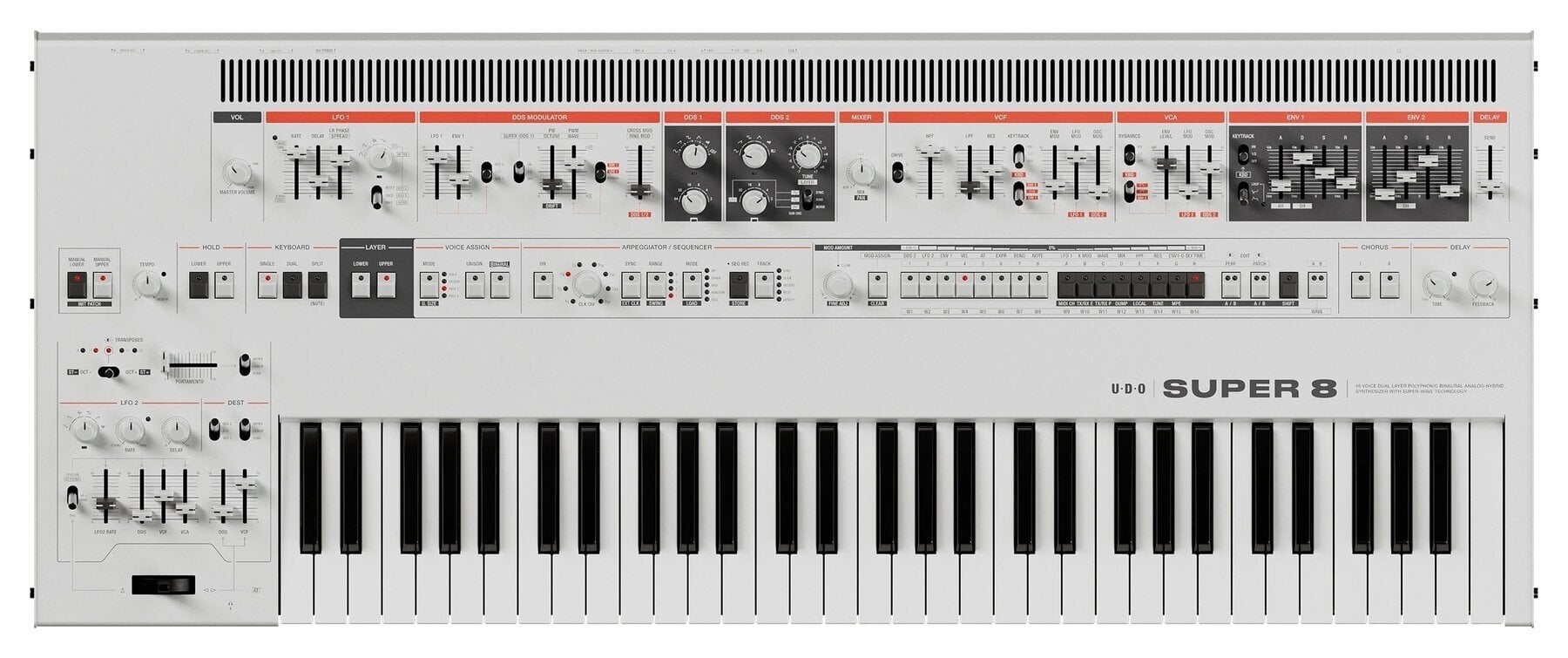
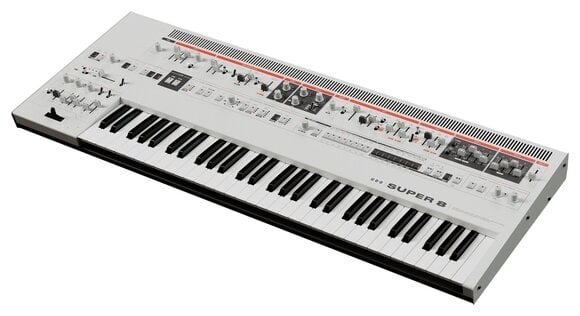
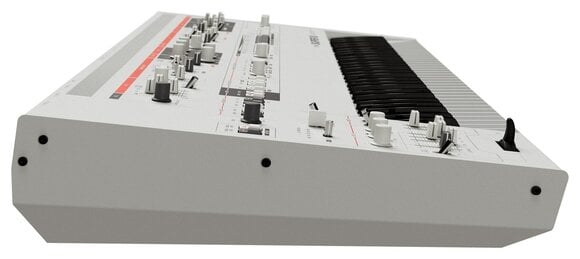

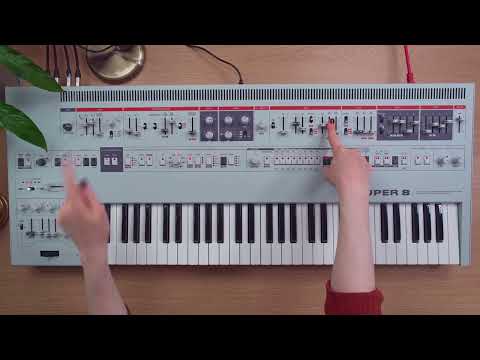
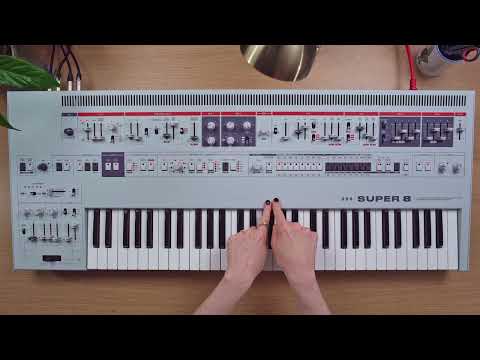

- Тype: Keyboard Synthesizer
- Sound Engine: Digital Analog Hybrid
- Number of Keys: 61
- Keyboard Type: Fatar, Polyphonic Aftertouch, Semi Weighted
- Polyphony: 16
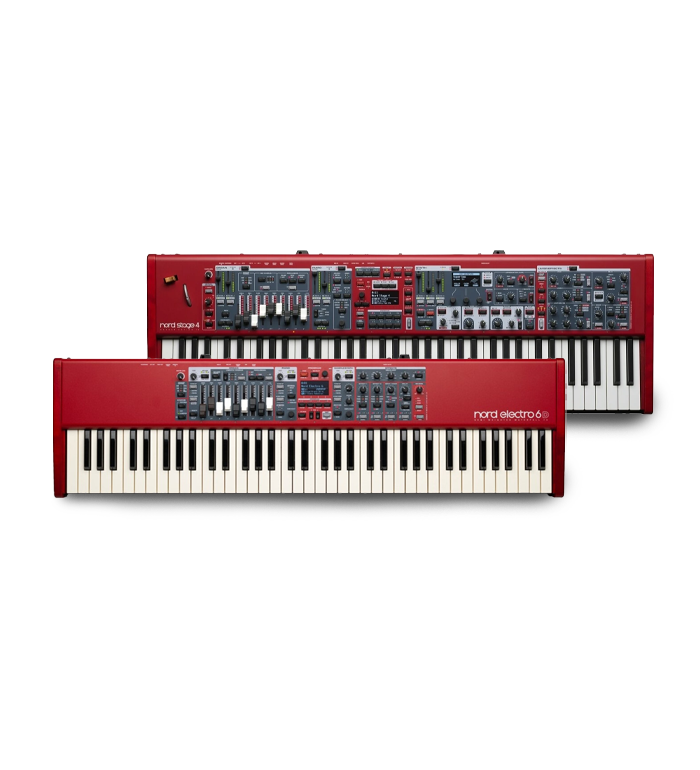
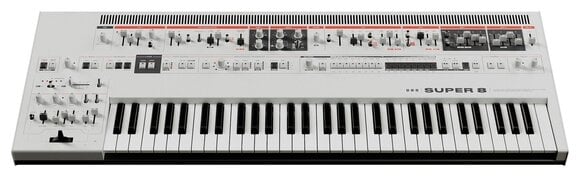
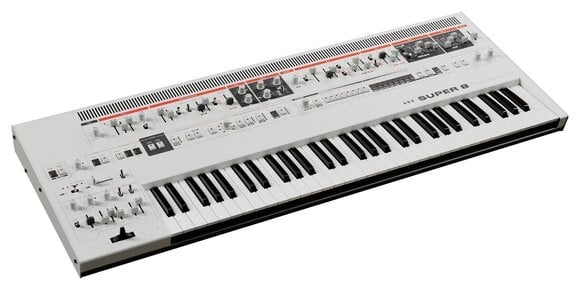
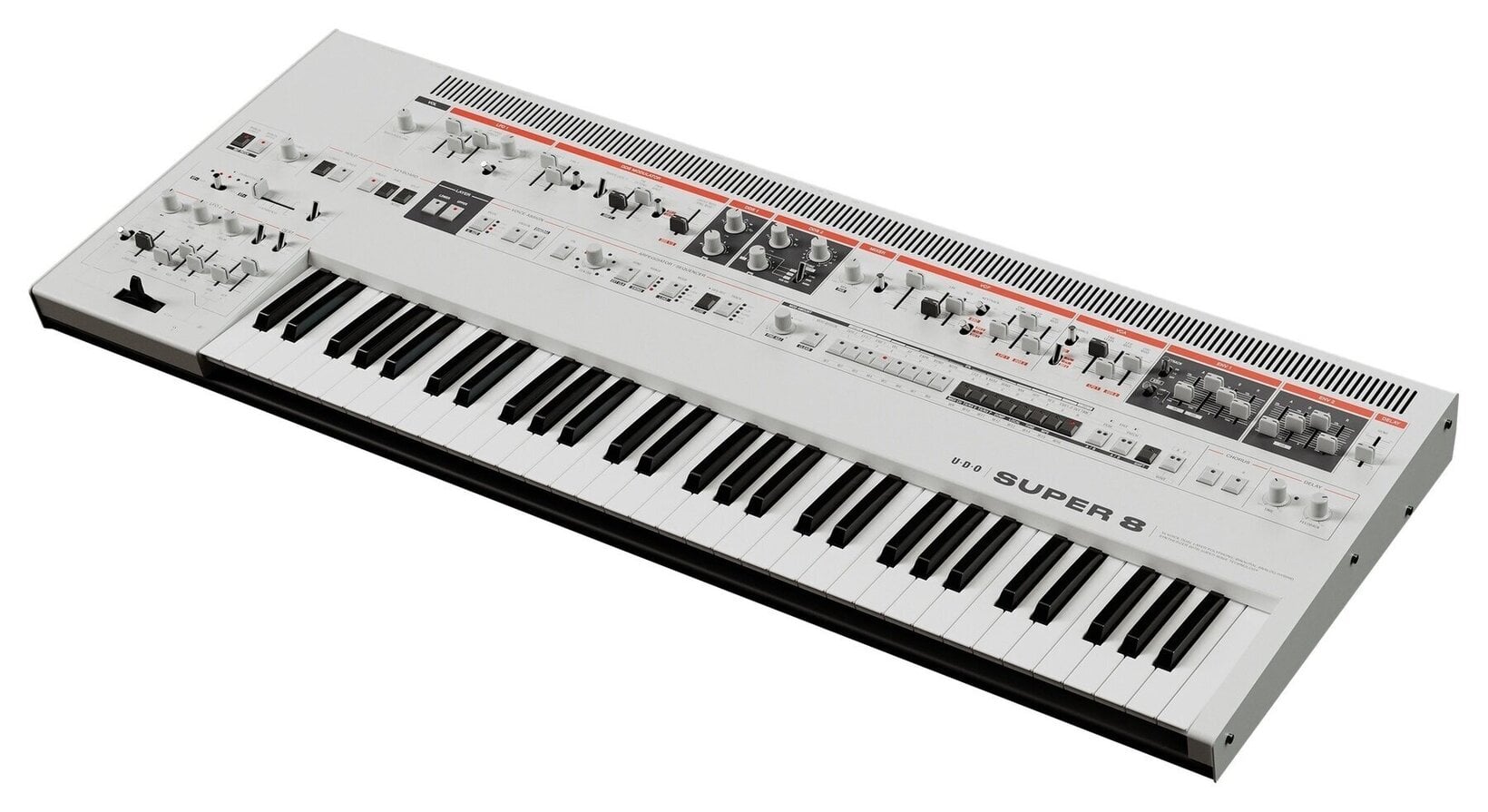
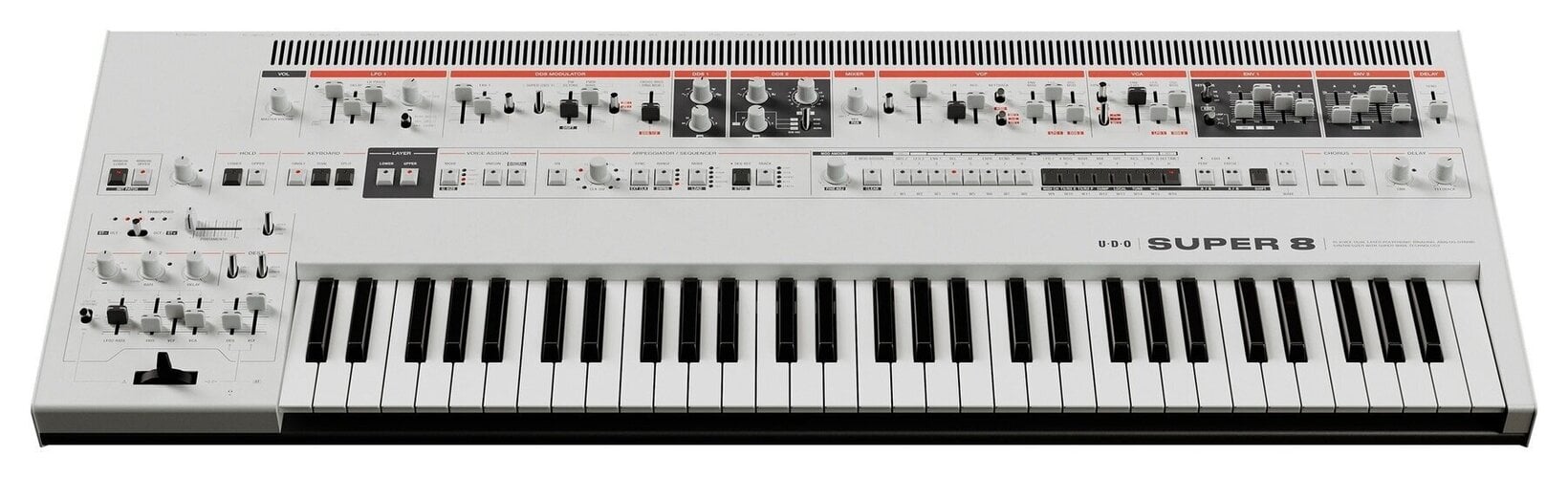
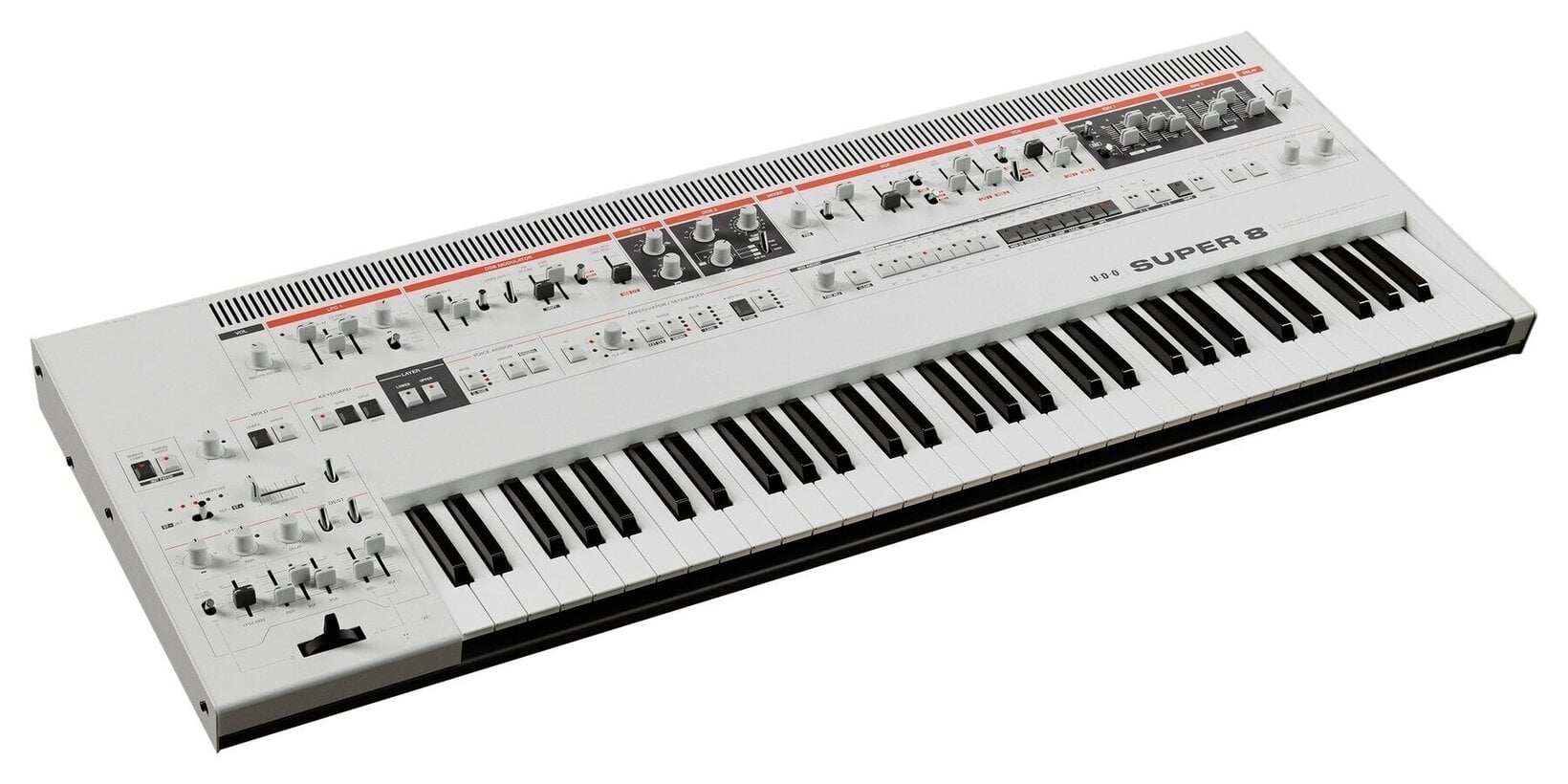
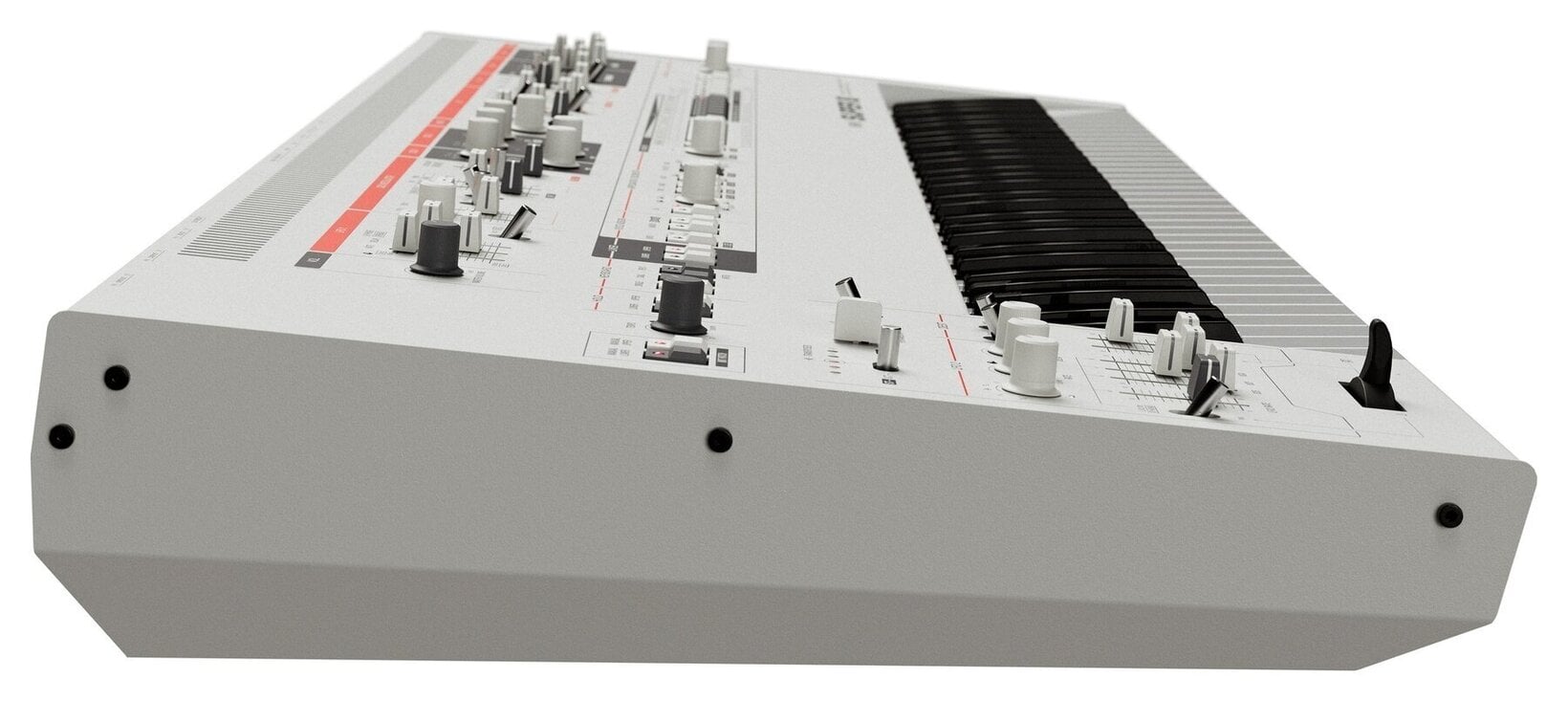
UDO Super 8 Keyboard Synthesizer White
The UDO Super 8 White is a 16-voice polyphonic, bi-timbral analog-hybrid keyboard synthesizer that pairs FPGA digital oscillators with a true-stereo binaural signal path. Housed in a folded aluminium and steel chassis, it features a 61-note Fatar keybed with polyphonic aftertouch for per-note expression. Two independent layers each carry their own chorus and delay, an arpeggiator, and a 64-step sequencer.
- 16-voice polyphony (expandable to 20 via SP8+ kit), bi-timbral operation
- Two FPGA-based oscillators with cross and ring modulation, plus bi-directional sync
- True-stereo binaural signal path creates 8 super-voices with independent left/right control
- 61-note semi-weighted Fatar keybed with polyphonic aftertouch and MPE support
UDO Super 8 White — A 16-Voice Binaural Hybrid Synthesizer for the Modern Keyboardist
The UDO Super 8 White is a flagship 16-voice polyphonic, bi-timbral analog-hybrid keyboard synthesizer built for players who want classic analog character fused with cutting-edge digital architecture. Sitting between the Super 6 and Super Gemini in UDO's lineup, this instrument distills the binaural signal path and dual-core power of its larger sibling into a more streamlined control layout. At its heart, two FPGA-based oscillators generate classic analog waveforms with cross and ring modulation, bi-directional sync, and up to 64 user-definable waveforms.
What Sets the Super 8 Apart in the Polyphonic Synth Market
Two features make this instrument genuinely rare in its category. First, the binaural analog signal path twins each voice into a stereo super-voice, allowing the left and right channels — and each of the player's ears — to receive an independent complete synthesizer voice with separately controllable oscillators, filters, and VCAs. Second, the polyphonic aftertouch keybed lets the player apply different aftertouch pressures to individual notes within a held chord, opening expressive possibilities that monophonic aftertouch keyboards cannot match. MPE support rounds out the expressive toolkit.
Sound Engine — FPGA Oscillators Meet Analog Filters
The hybrid architecture pairs ultra-precision FPGA digital oscillators with archetypal voltage-controlled analog filters and VCAs, delivering both the direct, alias-free character of digital and the warmth of analog signal shaping.
- Oscillators: Two FPGA-based oscillators per layer — first with super mode and up to 64 user-definable waveforms; second with two sub-oscillator options and hard sync
- Modulation: Two LFOs, two envelope generators, and an 8x8 modulation matrix per layer — extensive routing for evolving, dynamic patches
- Filters: Analog low-pass and high-pass filters with VCAs — voltage-controlled shaping inspired by classic polysynths
Performance Features — Polyphonic Aftertouch and Deep Sequencing
Performance controls are designed for hands-on exploration rather than menu diving. The 61-note semi-weighted Fatar keybed is velocity-sensitive and supports polyphonic aftertouch, while each layer runs its own arpeggiator and 64-step sequencer.
- Keyboard: 61-note semi-weighted Fatar keybed with polyphonic aftertouch — per-note expression for accenting individual voices in held chords
- Sequencing: Arpeggiator and 64-step sequencer per layer with smart hold — independent sequencing on each of the two timbres
- Polyphony: 16 voices standard, 8 super-voices in binaural mode, upgradeable to 20 via SP8+ kit — flexible voice allocation including monophonic and unison modes
Effects, Memory, and Studio Integration
Two 24-bit stereo effects processors per layer deliver chorus and delay independently to each timbre, while the I/O panel supports both modern and legacy studio setups.
- Effects: Two 24-bit stereo effects (chorus and delay) per layer — dedicated effects chains for each of the two timbres
- Memory: 512 performances, 512 patches, 64 alternative waveforms, 16 sequences — extensive storage for live sets and studio work
- Connectivity: MIDI In/Out/Thru via 5-pin DIN, USB MIDI, stereo 6.35 mm audio I/O, expression input (0–5V CV-compatible), sustain input, headphone output — full integration with hardware and DAW workflows
Who Should Choose the UDO Super 8 White
This synthesizer is the right choice for keyboardists, sound designers, and electronic music producers who need a flagship polyphonic instrument with binaural stereo imaging and deep hands-on control. Studio producers working in ambient, cinematic, and electronic genres will appreciate the binaural signal path for immersive spatial textures, while live performers benefit from polyphonic aftertouch, MPE compatibility, and the bi-timbral layer system for split and layered performances on stage. Players upgrading from the Super 6 will find familiar tactile controls with expanded polyphony and dual-layer power.
UDO Audio — The Power of Play
UDO Audio designed the Super 8 as the next evolution in the Super Series, distilling the philosophy of 'the power of play' into an instrument that pairs deep hands-on control with a unique stereo signal architecture. Inspired by analog polysynth heavyweights but built with state-of-the-art FPGA digital architecture and voltage-controlled analog components, the Super 8 embodies a meeting of old and new. The folded aluminium and steel chassis and no-expense-spared component selection reflect UDO's commitment to building instruments intended to last a lifetime.
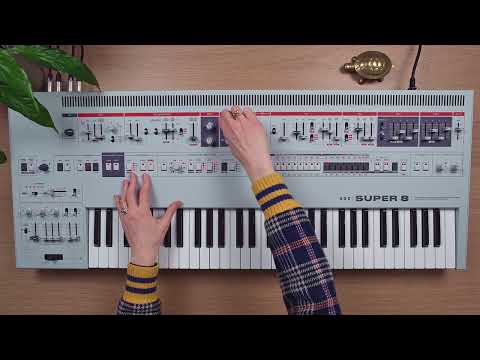
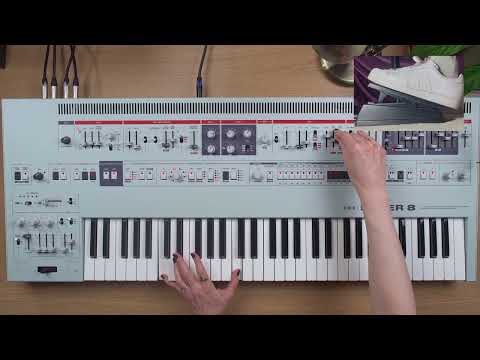
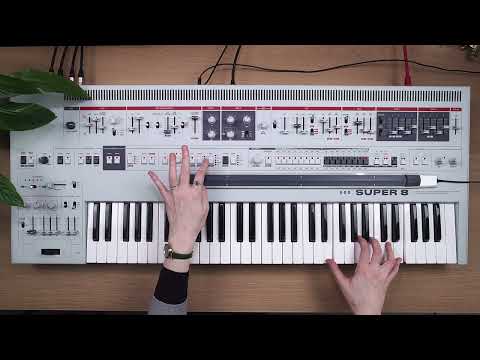
Number of Keys: 61
This instrument has 61 keys, equivalent to 5 octaves, providing a wide range of tones for a variety of musical applications.
Keyboard Type
- Semi Weighted
- Fatar
- Polyphonic Aftertouch
Aftertouch: Yes
Aftertouch technology on the keys allows musicians to add a new level of expression to their playing. When a key reaches the bottom of its stroke, the pressure exerted on the key can continue to be sensed and used to control various aspects of the sound, such as vibrato, volume, or tone modulation.
Polyphony: 16
The polyphony of this instrument allows up to <%=tp_value % notes to be played simultaneously, providing rich and complex musical possibilities.
LFO: 2
An LFO, or low frequency oscillator, brings electronic sound to life. It adds movement and interest to synthetic sounds and effects, playing an important role in both subtle synthesis and bold sound design. However, you won't hear the LFO itself because it acts as a modulator. This means that it does not directly affect the audio signal, but adjusts other parameters such as oscillator pitch and filter clipping.
Oscillators: 2
This dual-oscillator synthesizer offers a wide range of sonic possibilities that combine harmonic and non-harmonic tones. Users can adjust the frequency and amplitude of each oscillator separately, allowing harmonious layering of sounds, creating unison effects or captivating modulations.
Pitch Bend: Yes
The Pitch Bend allows smooth pitch changes, adding expressiveness to musical expression. Often used to create effects such as glissando or vibrato, this feature allows the player to make subtle or dramatic changes to the sound in real time. Pitch bend allows musicians to create smooth transitions between notes, increasing the dynamics and expressiveness of their performances.
Modulation: Yes
Modulation allows you to change different aspects of the sound in real time, opening up a wide range of creative possibilities. For example, it can affect the pitch of the sound, creating a vibrato effect, or it can change the amplitude of the signal, creating a tremolo effect. It can also adjust filtering to create smooth transitions between frequency bands and dynamic textures. Modulation can also be used to change the character of the sound depending on the time or intensity of playing, giving the sound a lively and moving character.
Arpeggiator: Yes
The Arpeggiator transforms chords into sequences of individual notes played in various rhythmic and melodic patterns. Instead of playing the chords as a harmonic whole, the Arpeggiator breaks the chords into individual notes and plays them sequentially according to the selected algorithm.
Effect Types
- Chorus
- Delay
Headphone Output: Yes
The headphone output allows direct connection of headphones for private listening. This output provides a convenient way to enjoy the sound without disturbing others or ambient noise.
Outputs
- MIDI Thru
- Headphone Jack 3,5 mm
- Headphone Jack 6,3 mm
- MIDI OUT
- Unbalanced Jack 6,3 mm TS
Pedal Inputs
- Volume
- Sustain
- Expression
MIDI Interface: Yes
It supports MIDI, allowing you to connect and communicate with other MIDI-compatible devices. This feature extends control and integration into the larger music environment, increasing flexibility and creativity in music creation.
Package Contents
- Power Cable
- USB Cable

Тype
Keyboard Synthesizer
Keyboard Technology
Fatar
Aftertouch
LFO
Envelope
2
Oscillators
Modulation
Faders
Yes
Arpeggiator
MIDI Interface
Bluetooth
Controls
Knob, Fader, Button
Other Controllers
Touch Sensitive
Accompaniment
Sound Engine
Number of Keys
Keyboard Type
Fatar, Polyphonic Aftertouch, Semi Weighted
Polyphony
Pitch Bend
Yes
Colour
Original Colour by Producer
White
Headphone Output
Inputs
Outputs
Unbalanced Jack 6,3 mm TS (6 x), Headphone Jack 6,3 mm, Headphone Jack 3,5 mm, MIDI OUT, MIDI Thru
Pedal Inputs
Analogue Outputs
USB
Filter
Low Pass, High Pass
Sequencer
64 steps
Package Contents
UK/EU Power supply included
Width (cm)
104,7
Height (cm)
12,4
Depth (cm)
41,6
Weight
14,5 kg
Net Weight (kg)
14,5
Made in
Great Britain


Documents
Instructions for use
Safety instructions
Please refer to the user manual for the specific safety instructions for this product.


